
Media drives happiness - designing inspiring online platforms
 For some time now, my grandmother is having problems with her eyesight. During this time, she's having problem reading and enjoys German audio books very much. She can use them to re-cap on childhood books she had forgotten, or on large classics she didn't find the time to read.
A few months ago, my dad asked me if I could find some mp3s of piyutim (Jewish prayers) from Turkish synagogues in Israel recorded at Yom Kipur. He said that my grandfather (from my father's Turkish side) loves hearing prayers on tape and perhaps I "could find some on the Internet".
At first, I told my father's there's no way I could find such extremely specific content online. German audio books were reasonably popular, but Hebrew mp3 recordings of Jewish prayers taken at Turkish synagogues? that's completely nuts.I told him that finding audio book versions of popular geeky-stuff is very easy. stuff like Tolkien's LOTR is all over the place, but what he was asking was just too much for conventional media availability on the net.
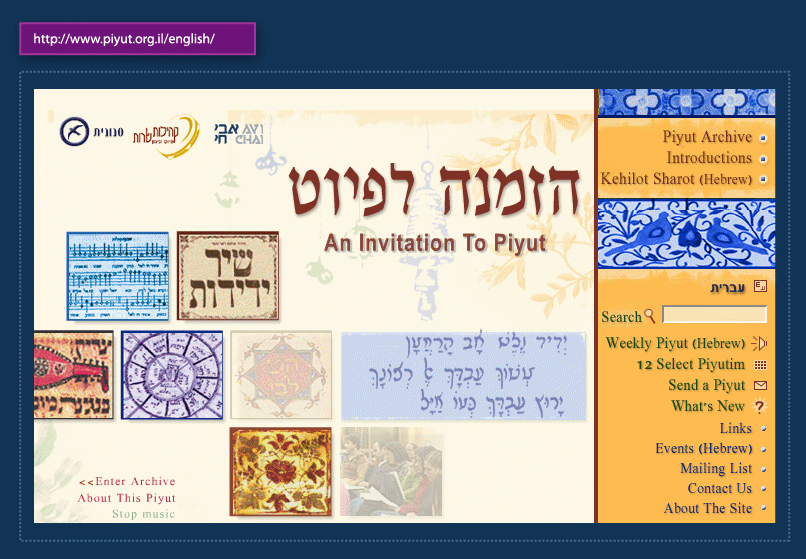
A few months later I read in Haaretz about a site called piyut. It took me a few minutes to realize what it was all about, but when I followed the link to the site I found a categorized list of recordings. I was quickly able to download about 140mb of recordings and burn them for grandpa.
My grandpa was thrilled. He keeps talking about the 2 audio-cds I burnt for him and listens to them again and again.
The fact I could actually find these exact recordings (Turkish, from Yom Kipur, no less) on the net is astounding. It was simply incredible. Sometimes web/software platforms enable great things. This is clearly the case here.
Certain types of media can touch our lives. They can drive happiness. Certain software/online platforms can make this possible. piyut made my grandpa happier. He's not even aware of the files' origin, but they excite him nonetheless.
Designers and developers can create platforms that truly excite people. These platforms deserve to be acknowledged so we can analyze their success and be inspired.What platforms do you find inspiring?
Labels: inspiring, interactive, life, online, platforms, web
posted by Guy at 02:22

 Hebrew Blog
 Subscribe to this blog's feed